
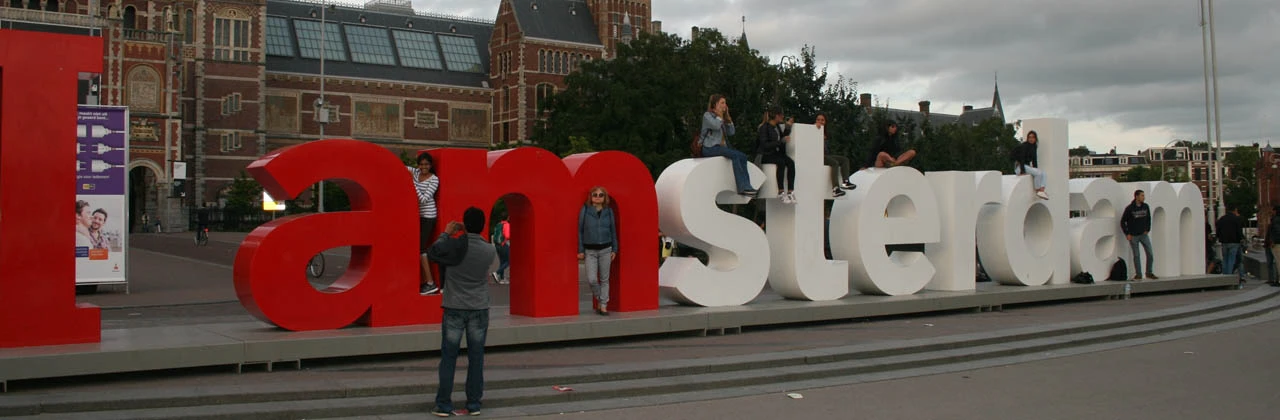
I Amsterdam
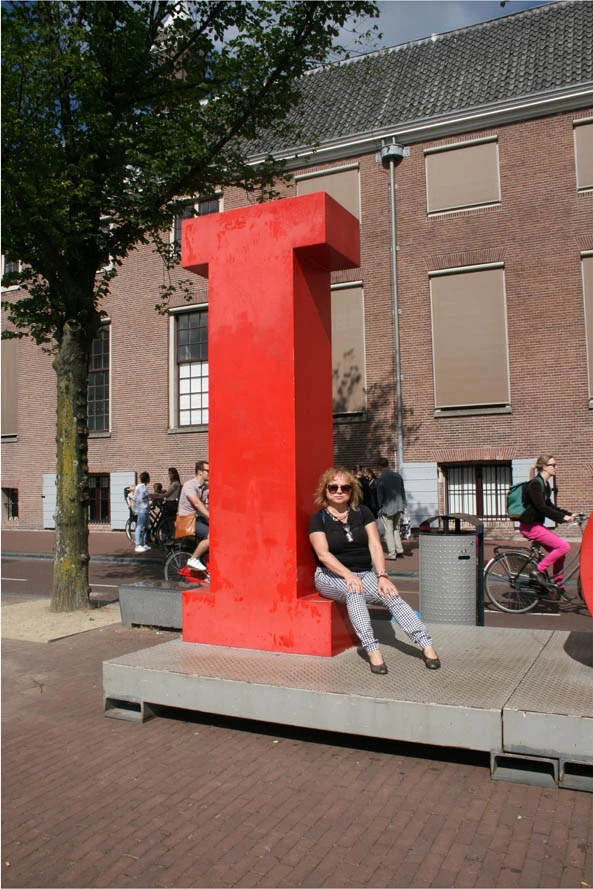
This time when visiting Amsterdam I spotted big letters in the fort of the Rijskmuseum that form a sentence “I Amsterdam”. It is a favourite place for many people to take a photo.
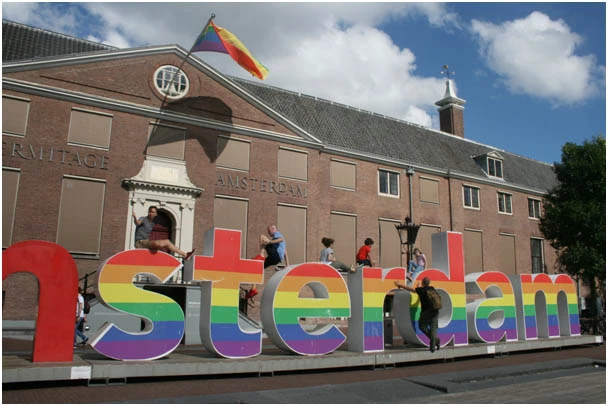
 To my amusement I found another “I amsterdam”, in rainbow colours,in the front of the Hermitage Amsterdam. Since I was in Amsterdam a day before the Gay Parade, I supposed that the rainbow “I Amsterdam” had been prepared for that reason. The whole city was decorated with rainbow balloons and posters presenting liberal attitude of Dutch to diversity.
As I was curious about the meaning of “I Amsterdam”, I found out that it is a new logo of Amsterdam, launched[1] in 2004 to rebrand unfavourable image of the city which gained an international status of a ‘swinging’ youth centre, based upon sexual liberation and narcotic indulgence. Judging by a huge number of people taking photos and spending time in the area of logo “I Amsterdam”, the new city brand proved a great success.
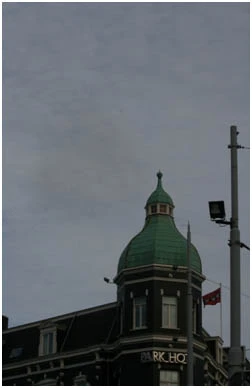
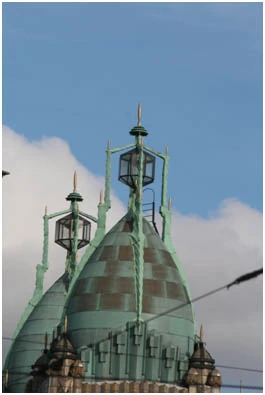
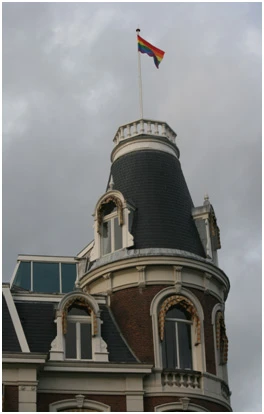
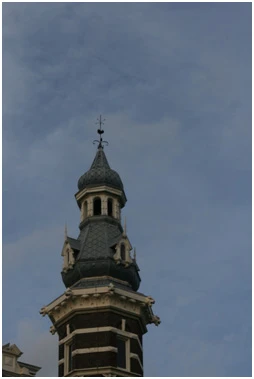
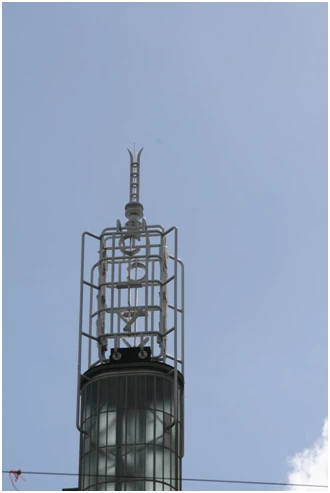
What I like in Amsterdam – besides the location of the city which makes it possible to walk almost to every interesting point in the city – are towers, which forced me to walk around with the head in the clouds.
 |
 |
 |
 |
|
|
 |
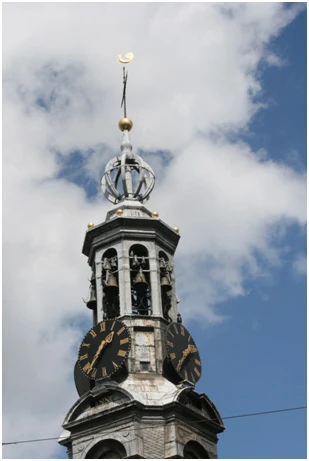
What I admire in the Netherlands are the clear symbols of the Dutch culture (called artefacts)
which are easy to recognise for everybody. And I appreciate the fact that Dutch treat them as a true part of their national identity, not only a tourist attraction.
Dutch artefacts
Wind and watermills
The windmills and watermills are iconic symbols of the country. Do you know that Dutch celebrate National Windmill Day in May, when 950 mills are open to visit?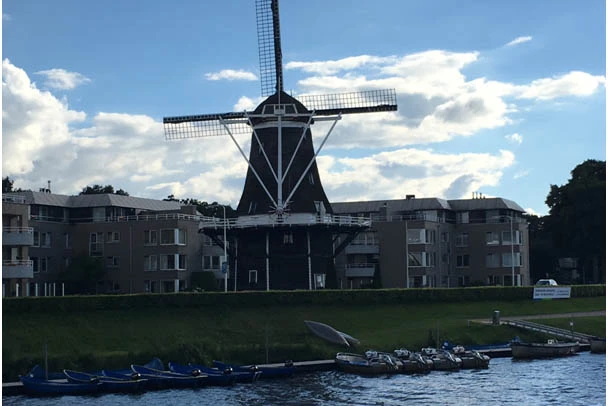
For Dutch windmills are the symbol of connection with nature which is an integral part of their intrinsic self. When talking with them about nature, they always mention “wood, water, green”.
Clogs (klompen)
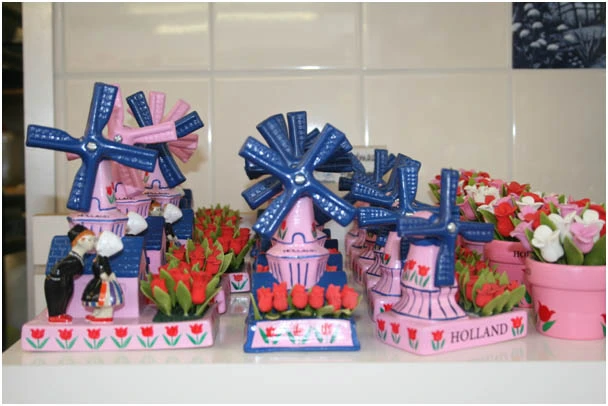
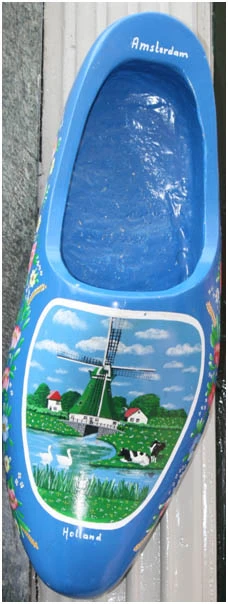
Clogs are made from wood. Approximately 3 million pairs of klompen are made each year (mostly for tourists), but farmers and gardeners still wear them. The red painting on top is a traditional motif on a painted clog and it makes clogs look like leather shoes (see the photo).
In the International Wooden Shoe Museum Eelde there is a largest collection of wooden footwear in the world (2 200 pairs).
Cheese and cows
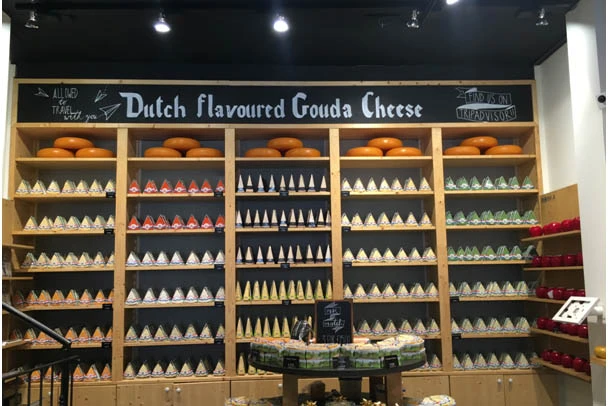
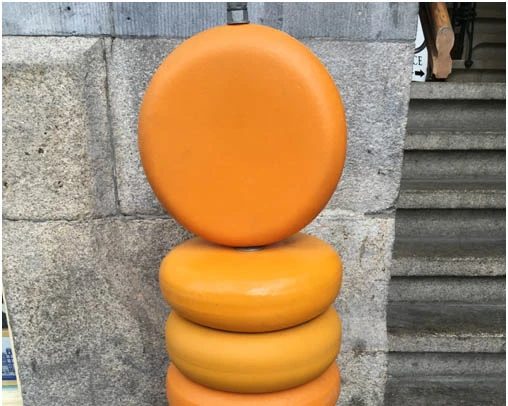
I have never seen so much drawings and sculptures of cows as in the Netherland, but if you know another Dutch symbol – cheese, an explanation is simple – the triad: cow – milk – cheese.
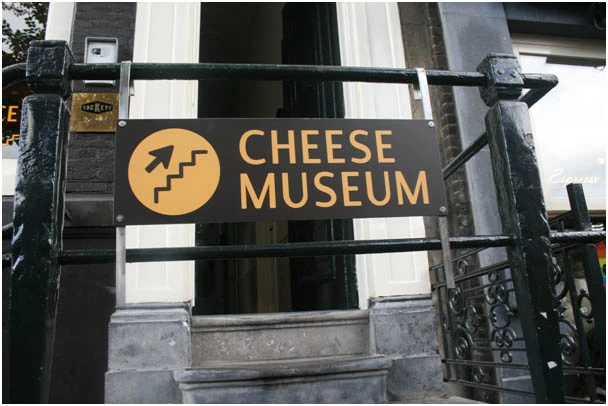
There is the Cheese museum in Amsterdam. It is a pity that I am lactose free so I cannot fully enjoy the taste of Dutch gouda!
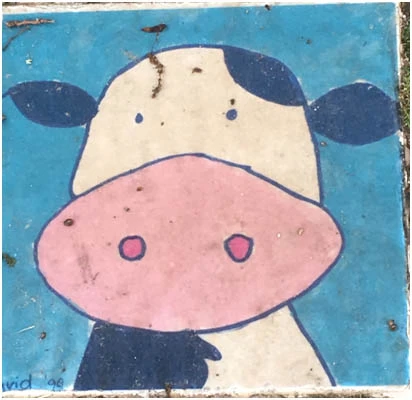 Drawing on a ceramic on a pavement in Ommen
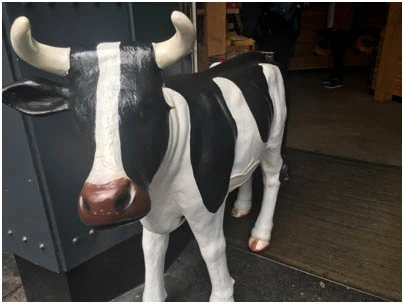 A sculpture of a cow in front of cheese shop in Amsterdam
 Bikes
Bikes
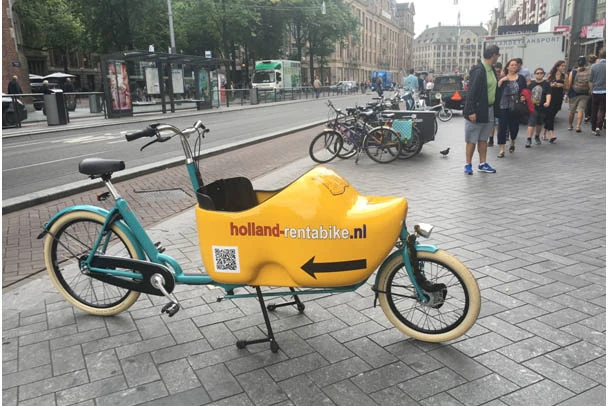
Bikes are everywhere, in different designs and shape. They are not only means of transportation but also a symbol of Dutch ecological and healthy style of life.


Canals & bridges
Amsterdam with more than 100 km of canals, about 90 islands and 1500 bridges is called “Venice of the North”. The 17th-century canal ring area, including the Prinsengracht, Keizersgracht, Herengracht and Jordaan, was classified as the UNESCO World Heritage Site in 2010.
Canals are a significant mode of transport as well as a place to live on boats. There is also a museum of boat houses. Every canal and house along it played a special role in history of Amsterdam. On one of the canals there is a number of plates with information commemorating Jews murdered during II WW.
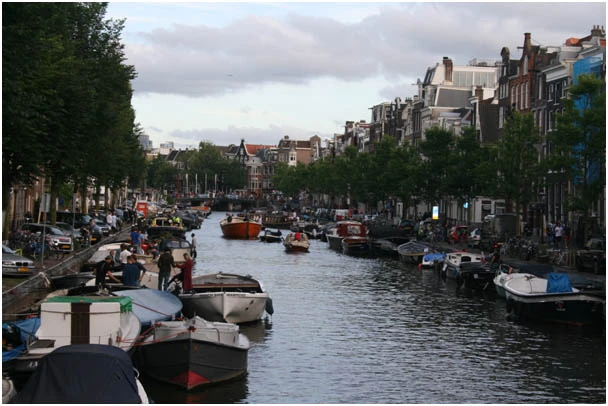
Like in cloudy Venice
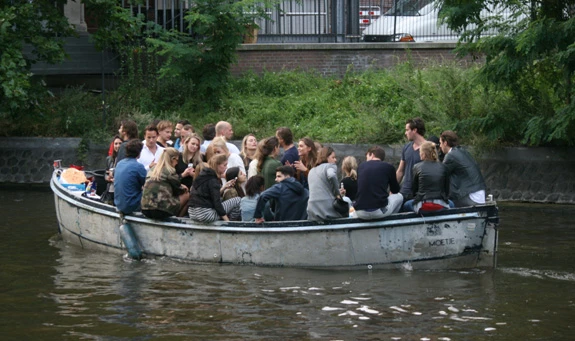 Enjoying life
Dutch painting
Dutch painting not only has played an important role in history of Holland’s art but also holds a prominent position in the world painting. Jan Vermeer van Delft, Hans Memling, Jan van Eyck, Pieter Bruegel, Hieronim Bosch, Rembrandt, Paul Rubens, Vincent Willem Van Gogh belong to the most famous painters. The Dutch painting, in contradiction to the Italian one, was not religious (with some exceptions like Rembrandt or Pieter Bruegel) due to the fact that sponsors of painters were representatives of rich middle class, not religious circles.
The Dutch painting is characterised by realism (and concentrates on landscapes, still life and portraits.I like the Dutch 17th– and 18th-century paintings as they reflect Dutch people’s way of living.
Do you know that painters in a given area specialized in certain motifs? In Utrecht they painted flowers, in Hag –flowers, fishes and crabs, in Amsterdam – fruit and vegetables, in Haarlem – table dishes with food.
I like Johannes Vermeer’spainting “Girl with a Pearl Earring” as well as the film directed by Peter Webber. The film stars Scarlett Johansson as the girl and Colin Firth as Vermeer. Nice, contemplative film.
Polish cultural connection
There is a film entitled The Mill and the Cross, made by Polish filmmaker Lech Majewski, which tells the story of Pieter Bruegel’s paintingProcession to Calvary.
With love from Holland
WiolaMałota
[1]Kavaratzis M & Ashworth G. J., “Changing the Tide: The campaign to re-brand Amsterdam” Urban and Regional Studies Institute University of Groningen Netherlands

